
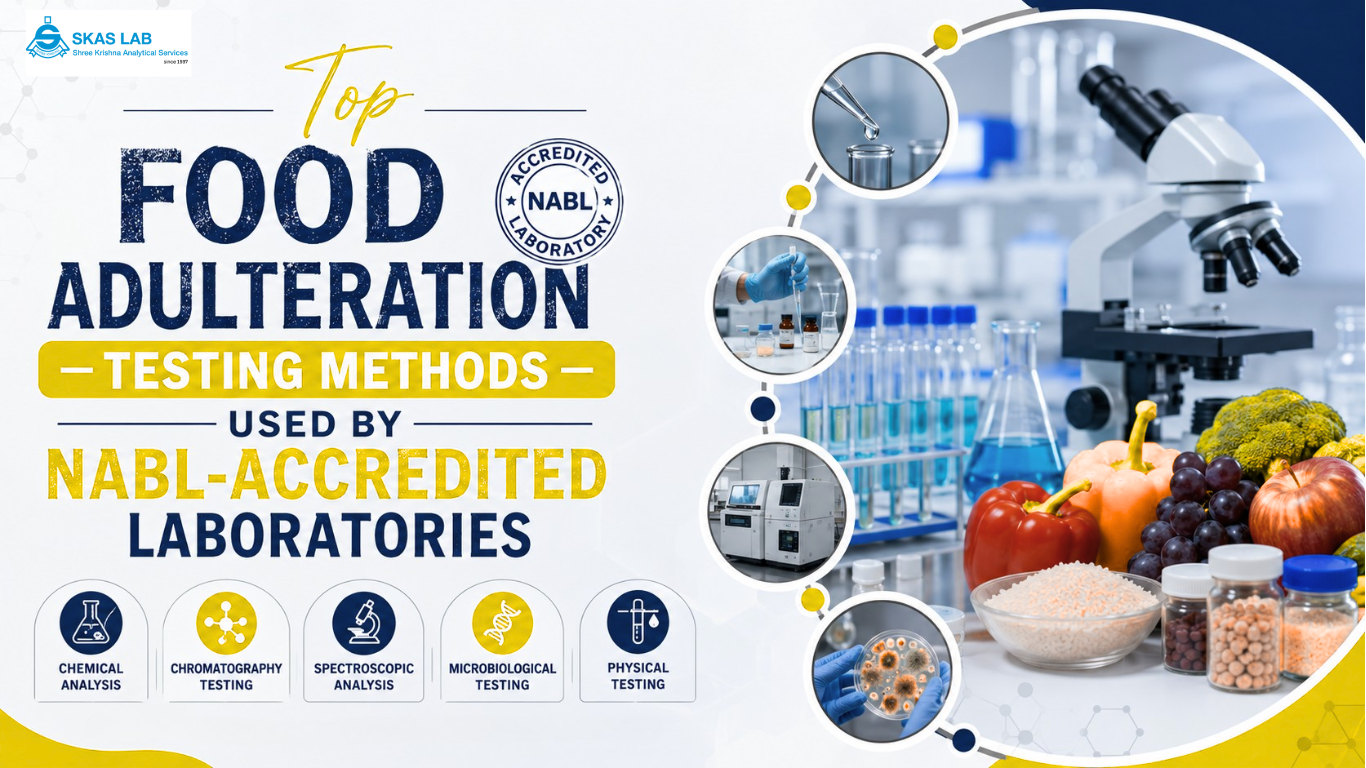
Top Food Adulteration Testing Methods Used by NABL-Accredited Laboratories
Every day, millions of Indians consume food without knowing what is actually inside it. Milk diluted with water, spices laced with artificial colours, honey blended with cheap sugar syrup — these are not rare incidents. They have become an increasing concern for public health due to their potential impact on consumer safety. Food adulteration testing has become one of the most critical safeguards in India's food supply chain. With regulatory agencies like FSSAI tightening enforcement and consumers demanding greater transparency, laboratories equipped with advanced instruments and qualified scientists are now at the frontline of food safety.
This guide walks you through the key laboratory methods used to detect adulterants in food, why NABL accreditation matters and how businesses across India are using analytical testing to protect their brand and their customers.
What Is Food Adulteration?
Food adulteration refers to the deliberate or accidental addition of substances that lower the quality, safety, or nutritional value of food. It can be intentional — driven by economic greed — or accidental, caused by poor handling, contaminated packaging, or inadequate storage conditions.
Common forms of food adulteration in India:
- Milk — diluted with water or contaminated with detergents and urea
- Spices — mixed with artificial colours, sawdust, or starch
- Edible oils — blended with cheaper, inferior oils
- Honey — adulterated with corn syrup or glucose solution
- Tea leaves — coloured with dyes to simulate freshness
- Flour and cereals — mixed with chalk powder or talc
- Ghee — adulterated with vanaspati or animal fats
- Pulses — coated with metanil yellow, a toxic synthetic dye
Unlike simple contamination from dust or pests, many adulterants are chemically active and can cause serious long-term health damage, particularly in children and the elderly.
Why Food Safety Testing Matters More Than Ever
For Consumer Health
Adulterated food is not just a quality problem — it is a health emergency. Heavy metals like lead and arsenic found in contaminated food have been linked to neurological damage. Toxic dyes banned under FSSAI regulations have been known to cause liver disorders and cancer with prolonged exposure. Pesticide residues in fruits and vegetables affect the nervous system, especially in children.
For Regulatory Compliance
India's Food Safety and Standards Authority (FSSAI) mandates that food businesses conduct regular quality tests. Non-compliance can result in license cancellation, product recalls and criminal liability under the Food Safety and Standards Act, 2006. Exporters face even stricter requirements because international buyers and customs authorities in the EU, US and Middle East demand accredited laboratory reports.
For Brand Reputation and Business Growth
A single contamination incident can permanently damage a food brand. Today, major retail chains and e-commerce platforms require food suppliers to submit valid test certificates before onboarding. For exporters, a NABL-accredited food testing lab report is often a mandatory document for customs clearance.
Why NABL Accreditation Makes a Real Difference
NABL (National Accreditation Board for Testing and Calibration Laboratories) is India's apex body for accrediting testing and calibration laboratories. It operates under the umbrella of the Department for Promotion of Industry and Internal Trade (DPIIT) and aligns with the international standard ISO/IEC 17025.
A NABL-accredited laboratory is not just a room with instruments. It follows a rigorous quality management system that covers:
- Trained and qualified analysts assessed for technical competence
- Calibrated instruments traceable to national and international standards
- Validated test methods aligned with FSSAI, BIS and Codex Alimentarius standards
- Documented procedures for sample handling, testing and reporting
- Regular internal audits and proficiency testing
When a test report carries the NABL logo, it carries legal and scientific credibility — both within India and internationally. For businesses evaluating their options, understanding the difference between NABL and non-NABL laboratories is an important first step. You can read a detailed comparison at NABL vs non-NABL lab differences explained.
Top Food Adulteration Testing Methods Used by NABL-Accredited Laboratories
This is the heart of what modern analytical laboratories do. Here is a breakdown of the key methods — what they detect, how they work and which food sectors rely on them.
1. Chemical Analysis (HPLC, GC-MS, LC-MS/MS)
Chemical analysis is the most widely used approach for identifying illegal additives, preservatives and synthetic compounds in food.
- HPLC (High-Performance Liquid Chromatography) separates and quantifies individual compounds in a food sample — ideal for detecting artificial sweeteners, preservatives and food dyes.
- GC-MS (Gas Chromatography-Mass Spectrometry) is highly effective for volatile compounds — used to detect solvents, adulterants in oils and chemical residues.
- LC-MS/MS (Liquid Chromatography Tandem Mass Spectrometry) offers extremely low detection limits, making it the gold standard for trace-level contaminants in complex food matrices.
These instruments are commonly used to test edible oils, beverages, spices, processed food and dairy products.
2. Heavy Metal Testing (ICP-MS, AAS)
Heavy metals — lead, mercury, arsenic, cadmium and chromium — can enter food through contaminated soil, water, packaging, or processing equipment. Even trace amounts of these metals pose serious health risks.
- ICP-MS (Inductively Coupled Plasma Mass Spectrometry) can detect metals at parts-per-billion levels, making it the preferred method for comprehensive heavy metal profiling.
- AAS (Atomic Absorption Spectroscopy) is used for individual metal analysis with high accuracy.
Critical for: baby food, dairy, seafood, leafy vegetables, grains and products with long supply chains.
3. Pesticide Residue Analysis (GC-MS/MS, LC-MS/MS)
India's agriculture sector relies heavily on pesticides. Residues from organochlorines, organophosphates, pyrethroids and neonicotinoids frequently remain on crops even after washing.
Multi-residue analysis using GC-MS/MS and LC-MS/MS can simultaneously screen for hundreds of pesticides in a single sample. This is essential for exporters supplying to the EU, which enforces some of the strictest pesticide limits in the world.
Food categories that require regular pesticide screening: fresh fruits and vegetables, cereals, spices, tea and infant food.
4. Microbiological Testing
Biological contamination from pathogens like Salmonella, E. coli, Listeria monocytogenes, Staphylococcus aureus and Clostridium perfringens is a major cause of foodborne illness outbreaks.
Microbiological testing involves culturing samples in controlled laboratory conditions, identifying microbial colonies and quantifying pathogen loads. Rapid methods using PCR (Polymerase Chain Reaction) are increasingly used for faster and more precise pathogen identification.
Critical for: dairy, meat, ready-to-eat food, bakery products, packaged juices and processed food.
5. Mycotoxin Testing (ELISA, HPLC, LC-MS/MS)
Mycotoxins are toxic compounds produced by moulds — primarily Aspergillus, Penicillium and Fusarium species. Aflatoxins (particularly B1, B2, G1, G2) and Ochratoxin A are the most dangerous, linked to liver cancer and immune suppression.
Testing methods include ELISA for rapid screening and HPLC or LC-MS/MS for confirmatory analysis.
Commonly tested products: groundnuts, corn, dry chillies, spices, wheat, animal feed and edible nuts.
6. Food Authenticity Testing (DNA Analysis, Spectroscopy, Isotope Ratio Analysis)
Food fraud — deliberately misrepresenting a product's origin, species, or composition — is a growing global problem. Authenticity testing uses advanced techniques to detect these frauds:
- DNA-based testing identifies species in meat and seafood products, detecting undeclared animal species substitutions.
- Near-Infrared (NIR) Spectroscopy is used to assess the purity of honey, olive oil and ghee without lengthy sample preparation.
- Stable Isotope Ratio Analysis (SIRA) can detect sugar syrup adulteration in honey and determine the geographic origin of food products.
7. Nutritional Analysis
Accurate nutritional labelling is mandatory under FSSAI regulations for packaged food in India. Laboratories analyse:
- Protein, fat, carbohydrate and fibre content
- Moisture, ash and caloric value
- Vitamins (A, B-complex, C, D, E) and minerals
- Saturated fats, trans fats and cholesterol
Nutritional analysis is also required for health claims, product development and compliance with export market regulations.
8. Allergen Testing
With food allergies responsible for thousands of emergency cases every year, allergen testing has moved from optional to essential. Common allergens tested include gluten (wheat, barley, rye), peanuts, tree nuts, soy, milk proteins (casein, whey), eggs, fish and shellfish.
Testing methods: ELISA kits, PCR and lateral flow immunoassays. Mandatory for packaged food exports to the EU, UK, US and Australia.
9. Artificial Colour and Additive Detection
Non-permitted synthetic dyes — such as metanil yellow, rhodamine B, Sudan dyes and malachite green — are commonly found in spices, sweets, street food and even beverages. These compounds are potentially carcinogenic and are strictly prohibited under FSSAI regulations.
Thin Layer Chromatography (TLC), HPLC and spectrophotometric methods are used to identify and quantify these illegal additives.
Common Food Products and Recommended Tests
| Food Category | Common Adulteration | Recommended Tests |
|---|---|---|
| Milk & Dairy | Water, detergent, urea, starch | Chemical analysis, SNF testing |
| Honey | Sugar syrup, glucose solution | Authenticity testing, C4 sugar test |
| Spices | Artificial colours, chalk, sawdust | Chemical analysis, dye detection |
| Edible Oils | Cheaper oils, mineral oil | GC-MS, adulteration profiling |
| Tea Leaves | Artificial colours, exhausted leaves | Colour and dye analysis |
| Flour & Cereals | Chalk, talc, lighter flour | Chemical analysis, microscopy |
| Ghee | Vanaspati, animal fats | Authenticity testing, fatty acid profile |
| Pulses | Metanil yellow, artificial coating | Dye detection, HPLC |
| Fruits & Vegetables | Pesticide residues, wax coatings | Pesticide residue analysis |
| Packaged Snacks | Trans fats, undeclared allergens | Nutritional and allergen testing |
How NABL Laboratories Conduct Food Testing: The End-to-End Process
Understanding the testing workflow helps businesses appreciate why accredited laboratories deliver more reliable results.
1. Sample Collection — Samples can be collected by the client or picked up directly by laboratory personnel. Proper sample integrity is maintained through sealed, tamper-evident containers and a documented chain of custody.
2. Sample Registration and Coding — Each sample is assigned a unique identification code. Test parameters are documented against the client's requirements and applicable FSSAI, BIS, or export standards.
3. Sample Preparation — Depending on the matrix (solid, liquid, semi-solid), samples undergo extraction, digestion, dilution, or filtration to prepare them for instrumental analysis.
4. Instrument Testing — Trained analysts run the prepared samples on calibrated instruments HPLC, GC-MS, ICP-MS, or microbiological chambers following validated standard operating procedures.
5. Quality Checks and Result Validation — Results go through internal quality control checks including blank runs, spike recovery tests and comparison against certified reference materials.
6. Report Generation — A detailed, tamper-proof test report is issued bearing the NABL logo, analyst details, test methods used, results and applicable regulatory limits. This report is legally recognised and court-admissible.
How to Choose the Right Food Testing Laboratory
Not all laboratories are equal. When selecting a testing partner, look for:
- NABL Accreditation — under ISO/IEC 17025, covering the specific parameters you need tested
- FSSAI Recognition — for reports to be accepted under Indian food law
- Modern, Calibrated Instruments — HPLC, GC-MS, ICP-MS, LC-MS/MS
- Qualified Scientists — analysts with domain expertise in food chemistry and microbiology
- Fast Turnaround Times — critical for manufacturers and exporters with production deadlines
- Transparent Reporting — test reports that clearly show methods, results and limits
- Diverse Industry Experience — experience with dairy, spices, exports, packaged food and more
- Sample Collection Support — nationwide or pan-India logistics assistance
Industries That Depend on Food Analytical Testing
- Food manufacturers and processors — batch testing for quality assurance and FSSAI compliance
- Dairy plants — milk adulteration, antibiotic residues, pathogen testing
- Exporters and importers — compliance with destination market regulations
- FMCG companies — raw material qualification and finished product testing
- Restaurants and hotel chains — verifying ingredient purity and supplier claims
- Retail chains and private labels — protecting their brand against supply chain fraud
- Cloud kitchens and e-commerce food brands — building consumer trust with verified quality
- Agricultural producers and farmer cooperatives — pre-harvest pesticide screening
SKAS Lab: Your Trusted Partner for Food Quality Analysis
SKAS Lab (Shree Krishna Analytical Services) is a NABL-accredited analytical testing laboratory based in Delhi, serving food manufacturers, exporters, dairy businesses and compliance teams across India.
At SKAS Lab, food safety testing is carried out by experienced chemists and microbiologists using advanced instruments including ICP-MS, HPLC, GC-MS and LC-MS/MS. Every test report is issued in compliance with ISO/IEC 17025 standards — carrying the credibility and legal recognition your business needs.
Whether you need pesticide residue analysis, heavy metal profiling, mycotoxin testing, or a comprehensive FSSAI-compliant food adulteration test, SKAS Lab has the expertise, accreditation and turnaround time to deliver.
Explore SKAS Lab's complete range of testing capabilities on the SKAS Lab official website for analytical services and learn about the specific food and agricultural testing solutions for manufacturers.
Real-World Scenarios: When Testing Matters Most
Case 1 - The Spice Exporter and the EU Rejection
An Indian spice manufacturer was exporting red chilli powder to a European buyer. A shipment was rejected at customs because pesticide residues exceeded EU maximum residue levels (MRLs). After engaging an NABL-accredited food testing lab, the company identified the contamination source (a specific supplier), switched vendors and used pre-shipment testing for every subsequent batch. No rejections since.
Case 2 - The Honey Brand That Almost Lost Everything
A small honey brand in India received consumer complaints about unusual sweetness and thin consistency. Laboratory authenticity testing confirmed the presence of added corn syrup — a product of supplier adulteration, not the company's own process. The brand immediately switched suppliers, added regular incoming material testing to their quality protocol and recovered customer trust with transparent third-party testing certificates.
Case 3 - The Dairy Cooperative's Quality Upgrade
A dairy cooperative was struggling to get its milk products listed with a major retail chain. The retailer required NABL-certified milk quality reports covering fat content, SNF (Solids Not Fat), adulterant testing and microbial load. Once the cooperative partnered with an accredited lab and began routine testing, they cleared the retailer's audit and secured the listing within two months.
Frequently Asked Questions
Q1. What is food adulteration testing?
It is the scientific process of analysing food samples in a laboratory to detect the presence of unauthorised substances, adulterants, contaminants, or misrepresented ingredients that compromise safety or quality.
Q2. Which laboratory tests are most commonly used to detect adulteration?
The most commonly used methods include chemical analysis (HPLC, GC-MS), heavy metal testing (ICP-MS), microbiological testing, pesticide residue screening, mycotoxin analysis and food authenticity testing.
Q3. Is food adulteration testing mandatory in India?
Yes. FSSAI requires food businesses to conduct regular testing of raw materials and finished products. For exporters, testing is mandatory to comply with destination country regulations.
Q4. Why should I specifically choose a NABL-accredited laboratory?
NABL accreditation under ISO/IEC 17025 ensures the laboratory follows validated methods, uses calibrated instruments and employs qualified analysts. Reports from accredited labs are legally recognised and accepted by FSSAI, export authorities and international buyers.
Q5. How long does food testing typically take?
Turnaround time depends on the test parameters. Microbiological tests typically take 5–7 working days. Chemical and instrumental analysis for standard parameters is usually completed in 3–5 working days. Mycotoxin and allergen tests may take 3–7 days depending on the method.
Q6. Can NABL test reports be used for export clearance?
Yes. NABL-accredited laboratory reports are internationally recognised and accepted by customs authorities in the EU, US, Middle East and other major export markets.
Q7. Which food products need regular testing?
Dairy products, spices, oils, honey, packaged food, fresh produce, grains, seafood, meat and ready-to-eat food products all benefit from regular quality analysis — especially if they are supplied to retailers, exported, or sold under a brand name.
Q8. How do I get my food products tested at SKAS Lab?
You can reach the team at SKAS Lab through the food testing inquiry and sample submission page to discuss your testing requirements, turnaround timelines and pricing.
Conclusion
India's food supply chain is complex and the risks of adulteration — whether intentional or accidental — are very real. The right approach is not to hope for the best but to test with the best. Scientific testing through an accredited food analysis laboratory is no longer a luxury. It is a competitive advantage, a compliance requirement and a responsibility to every consumer who trusts your product.
SKAS Lab is committed to delivering accurate, reliable and timely analytical testing services that help food businesses across India meet quality standards, protect their brand and stay ahead of regulatory expectations. If you are a food manufacturer, exporter, or brand looking for dependable NABL-accredited analytical testing, connect with the SKAS Lab team and discuss your requirements — no obligation, just expert guidance.
Stay connected with SKAS Lab for food safety updates, testing insights and laboratory news on Facebook, Instagram and LinkedIn.
