
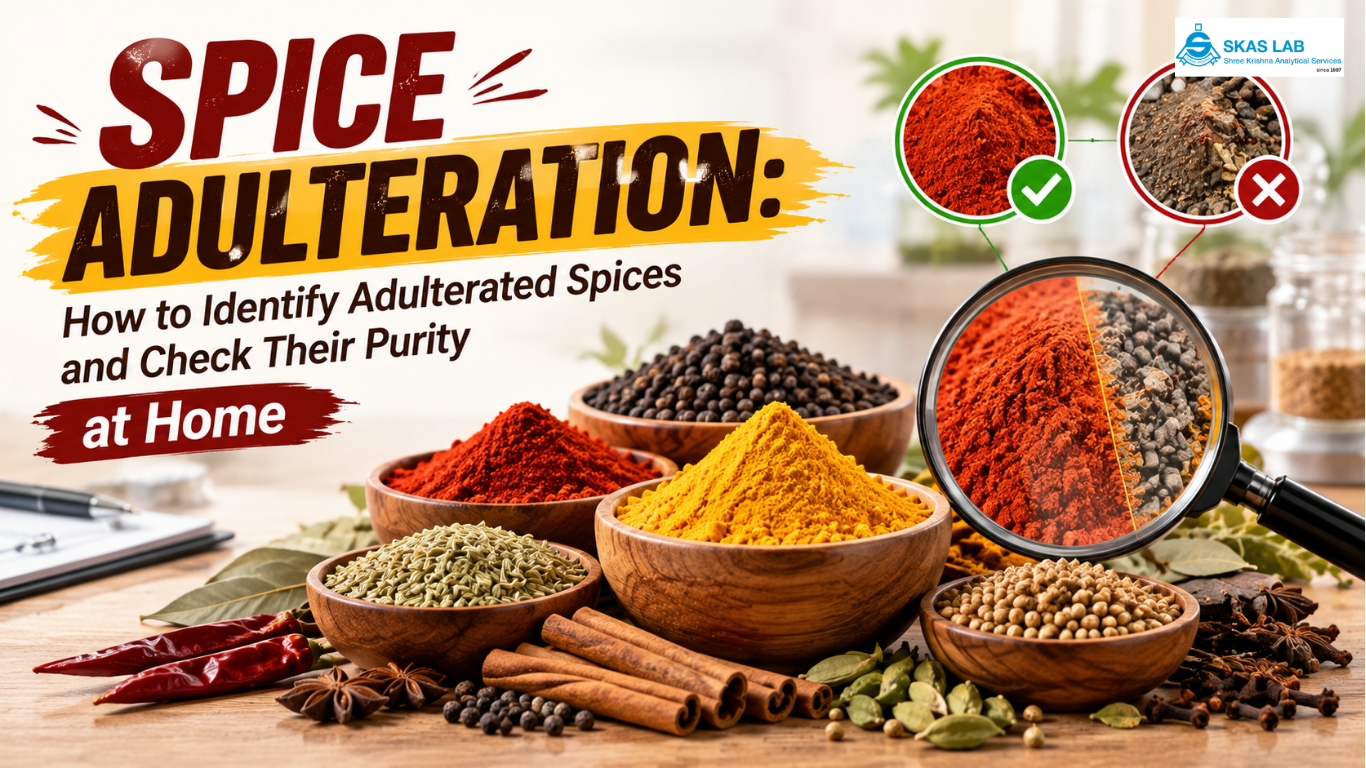
Spice Adulteration: How to Identify Adulterated Spices at Home
A 2019 survey by the European Commission's Knowledge Centre for Food Fraud and Quality examined 1,885 samples of spices and herbs. They found suspected adulteration rates ranging from 6% to 48%, depending on the specific spice. Spice adulteration is the illegal practice of adding inferior, hazardous, or fake substances to pure spices to increase profit margins. In India, the Food Safety and Standards Authority of India (FSSAI) tracks this problem closely and provides consumers with official rapid-testing guidance through its Detect Adulteration with Rapid Test (DART) manual.
Consumers can identify adulterated spices at home using simple water diffusion tests, paper rub tests, and visual checks to verify purity and avoid dangerous chemical additives. Here is how you can protect your kitchen from fake ingredients.
What is spice adulteration and why is it a major issue in India?
Spice adulteration is the deliberate addition of cheaper, hazardous, or fake materials to pure spices to boost weight and profit margins, and it is a major issue in India because the country produces 75% of the world's spices, making its supply chain a massive target for fraud.
Spice fraud is nothing new. Greek botanists in 200 BC raised concerns about pepper being impure. The American Spice Trade Association has stated that adulteration is one of the major concerns of the spice industry. Today, the financial stakes are massive. According to the U.S. Food and Drug Administration, food fraud affects 1% of the global food industry, costing about $10 to $15 billion annually, though recent expert estimates put the cost as high as $40 billion a year.
The economic impact of spice fraud
The economic impact of spice fraud hits both the global market and the end consumer. During the 2018–2019 fiscal year, India exported 0.85 million tonnes of spices worth US$2.25 billion. Because spices have high economic value for their flavor, color, aroma, and preservative properties, they are highly vulnerable to economically motivated adulteration (EMA). End sellers who do not control the supply chain face numerous opportunities for contamination at different product stages. If a product is sold below market price, that is a strong indicator it contains impurities.
What are the most common spice adulteration types in India?
The most common spice adulteration types in India include bulking red chilli powder with brick dust and artificial dyes, mixing turmeric powder with lead chromate to enhance color, and substituting black pepper with papaya seeds.
Because these spices are traded in large volumes and sold in dried, ground forms, visual clues of tampering are easily hidden. Ground cinnamon is frequently bulked out with cheaper plant materials or brick dust, while lower-grade cassia is sold as "true" cinnamon.
Red chilli powder and artificial dyes
Red chilli powder is frequently mixed with brick dust or artificial dyes to make it look vibrant. Chilli and paprika had a 6% suspected adulteration rate in the European Commission survey, making them some of the most tampered spices globally. Sellers use toxic colorants to mask the addition of cheap fillers, making the powder look pure red.
Turmeric powder and lead chromate
Turmeric has a complicated supply chain, making it highly susceptible to fraud. To make dull turmeric look bright yellow, sellers add lead chromate, a toxic chemical. Turmeric, cumin, and pepper were moderately affected by adulteration, with rates between 11% and 17% in the European Commission survey.
Black pepper and papaya seeds
Black pepper is often adulterated by mixing in papaya seeds, which look nearly identical to the real peppercorn once dried. As the American Chemical Society's ChemMatters publication highlights, mixing papaya seeds into pepper is a classic, dangerous example of food fraud. This not only diminishes the quality of your food but can also introduce unintended pesticide residues into your diet.
What are the health effects of consuming adulterated spices?
Consuming adulterated spices causes severe health effects, ranging from immediate stomach distress to long-term organ damage and toxicity from chemical colorants like Metanil Yellow.
Adulteration is not just an economic scam. Some adulterations can be deadly. When sellers mix olive leaves into oregano or add dangerous levels of lead to cinnamon, they introduce hazardous substances into the human body.
Short-term and long-term health risks
The adulterated spices health effects vary based on the contaminant. Short-term risks include stomach pain, nausea, and allergic reactions. For example, bulking up spices with starches or grains poses a severe risk for customers with gluten allergies. Long-term risks are far more severe. Continuous exposure to heavy metals and chemical dyes leads to organ failure, neurological damage, and chronic toxicity.
Toxicity from chemical colorants like Metanil Yellow
Artificial dyes like Metanil Yellow and Sudan Red are frequently used to enhance the color of red chilli powder and turmeric. These banned industrial dyes are highly toxic. Metanil Yellow is known to cause severe liver and kidney damage over time. The American Chemical Society notes that food fakes and frauds introduce dangerous levels of lead and pesticides into our food, making the consumption of these chemical colorants a severe health hazard.
How can you identify adulterated spices at home using simple tests?
You can identify adulterated spices at home using simple tests like water diffusion, paper rubs, and visual inspections to check for artificial dyes and cheap fillers.
Because physical methods are simple to use, they are the best first line of defense for consumers. However, the time taken to screen every sample limits their commercial application, which is why building relationships with trustworthy suppliers is also critical.
The water diffusion test for powdered spices
The water diffusion test for powdered spices involves sprinkling a small amount of the spice into a glass of water to see if it settles or dissolves. Pure spices like turmeric or red chilli powder will float and slowly settle at the bottom without dissolving. If the spice immediately leaves a streak of color in the water, it contains artificial dyes. If you see a white residue or sand-like particles settling quickly, the powder has been mixed with starch or brick dust.
The paper rub test for detecting artificial dyes
The paper rub test for detecting artificial dyes requires placing a pinch of spice on a piece of white paper and rubbing it firmly. If the paper absorbs a bright, unnatural color, the spice contains chemical dyes like Sudan Red or Metanil Yellow. Pure spices will only leave a light, natural oil stain without bleeding heavy color onto the paper.
How to check adulteration in black pepper
To check adulteration in black pepper, place a handful of peppercorns in a glass of water. Pure black pepper will sink to the bottom because it is dense. Adulterants like papaya seeds are lighter and will float to the surface. This simple visual inspection instantly separates the fake seeds from the real peppercorns.
What are the advanced spice adulteration testing methods?
Advanced spice adulteration testing methods include analytical techniques like chemical, instrumental, and molecular procedures used to detect impurities that physical methods miss.
Because physical methods are simple but time-consuming, laboratories rely on advanced instrumentation for accurate quality control. Complex instruments and data processing restrict the routine use of these methods for home cooks, but they are the gold standard for food safety regulators.
Laboratory chromatography and spectroscopy
Laboratory chromatography and spectroscopy are used to separate and identify the exact chemical makeup of a spice sample. These analytical techniques can detect trace amounts of artificial dyes, heavy metals, and foreign plant DNA. While highly accurate, the complex instruments required make this testing expensive and slow for routine commercial screening. Accredited labs such as Skas Lab (Shree Krishna Analytic Testing Lab) use these advanced methods to give manufacturers and exporters verified, lab-grade proof of purity.
FSSAI standardized testing protocols
The Food Safety and Standards Authority of India (FSSAI) provides standardized testing protocols to detect adulteration. FSSAI's official DART (Detect Adulteration with Rapid Test) manual outlines specific home testing procedures for consumers. These protocols bridge the gap between complex laboratory instruments and simple kitchen tests, giving everyday buyers a reliable way to verify spice purity.
Which Indian spice brands are safe from adulteration?
Indian spice brands that maintain strict supply chain transparency, adhere to Good Manufacturing Practices (GMPs), and hold third-party certifications are safe from adulteration.
Finding a trustworthy supplier is essential to ensure brand integrity. A basic understanding of the spice you are buying helps identify vulnerabilities during the purchasing process. The more stops a product takes on its way to you, the more opportunities exist for adulteration.
How to read spice labels and certifications
When reading spice labels, look for third-party certifications and clear statements of origin. Ask suppliers about their raw material control and adherence to GMPs. If a product is sold below market price, that is a red flag for impurities. Suppliers who prioritize supply chain transparency offer the safest ingredients from the start.
The role of regulatory bodies like FSSAI and ASTA
Regulatory bodies like FSSAI and ASTA play a vital role in preventing spice adulteration. The American Spice Trade Association (ASTA) actively works on adulteration and contamination prevention, stating that it is a major industry concern. FSSAI provides the DART manual for rapid home testing. The Indian Institute of Spices Research also contributes to detecting adulterants. Together, these bodies enforce standards that keep the global supply chain honest.
How can you report suspected spice adulteration to authorities?
You can report suspected spice adulteration to authorities by contacting the Food Safety and Standards Authority of India through their official grievance portal or helpline.
If you suspect a spice is adulterated, do not consume it. Keep the packaging as evidence. Reporting bad actors helps regulatory bodies track down fraudulent supply chains. This protects your local community from the health effects of consuming adulterated spices.
At Skas Lab (Shree Krishna Analytic Testing Lab), we believe your kitchen should be a safe space. Understanding spice adulteration empowers you to make better choices for your health. Trust Skas Lab (Shree Krishna Analytic Testing Lab) to provide the knowledge you need to keep your food pure. Contact us today to know more about our spice and herb testing services.
Follow us on Facebook and LinkedIn for more food safety tips and lab updates.
Key Takeaways
- Spice adulteration is the illegal addition of cheap fillers and hazardous dyes to increase profit margins.
- Common adulterants include brick dust in red chilli powder, lead chromate in turmeric, and papaya seeds in black pepper.
- You can identify fake spices at home using simple water diffusion, paper rub, and visual float tests.
- Consuming adulterated spices can cause stomach distress, organ failure, and severe toxicity from chemical dyes.
- Always buy from brands with strict supply chain transparency and recognized third-party certifications.
Comparison of Spice Adulterants and Home Testing Methods
| Spice | Common Adulterant | Home Testing Method |
|---|---|---|
| Red Chilli Powder | Brick dust, Sudan Red, Metanil Yellow | Water diffusion test or paper rub test for artificial color bleeding |
| Turmeric Powder | Lead chromate, starch | Water diffusion test to check for immediate color streaks or white residue |
| Black Pepper | Papaya seeds | Water float test to separate lighter fake seeds from dense real peppercorns |
| Ground Cinnamon | Cheaper cassia, brick dust | Visual inspection for texture inconsistencies and unusually low pricing |
Frequently Asked Questions
What are the types of adulteration?
Spice adulteration types include intentional substitution with cheaper materials, incidental contamination during processing, and metallic contamination. Sellers intentionally add cheap fillers like brick dust or artificial dyes to increase weight. Incidental contamination includes pesticide residues, while metallic contamination involves hazardous substances like lead chromate.
How to check adulteration in black pepper?
To check adulteration in black pepper, place a handful of peppercorns in a glass of water. Pure black pepper is dense and will sink to the bottom. Common adulterants like papaya seeds are lighter and will float to the surface, allowing you to easily separate the fake seeds from real peppercorns.
What are the health effects of consuming adulterated spices?
Consuming adulterated spices causes severe health effects ranging from immediate stomach distress to long-term organ damage. Short-term risks include nausea and allergic reactions, while long-term exposure to heavy metals and chemical dyes like Metanil Yellow leads to liver and kidney damage, neurological issues, and chronic toxicity.
How do you test for artificial dyes in red chilli powder at home?
To test for artificial dyes in red chilli powder at home, place a pinch of the spice on white paper and rub it firmly. If the paper absorbs a bright, unnatural color, it contains chemical dyes. Pure red chilli powder will only leave a light, natural oil stain without bleeding heavy color.
Which Indian spice brands are safe?
Safe Indian spice brands maintain strict supply chain transparency, adhere to Good Manufacturing Practices, and hold third-party certifications. When reading labels, look for clear statements of origin and avoid products sold below market price, which is a strong indicator of impurities or cheap fillers.
